Core Subjects in M.Tech Mechanical Engineering Curriculum
What are the core subjects covered in the M.Tech Mechanical Engineering curriculum?
Why is the M.Tech mechanical engineering curriculum relevant to the future and AI-driven industries?
Ever wonder how every engineering marvel stands through time and trial? A bridge that doesn’t collapse, the patient Roman aqueducts, still carrying water even centuries after their builders are long gone, and the Shinkansen (Bullet train) travelling through landscapes in the blink of an eye. These engineering marvels’ integrity is tested through trial and time. And yet each one is still standing; that is the quiet power of Mechanical Engineering.
And as mechanical engineering evolved, so did the ways in which we learn and practise it, shaped inevitably by the shifting technological sphere. The curriculum that trains today’s engineers reflects that evolution, designed around the tools, challenges and possibilities of the modern world. This guide walks you through all the core subjects taught in the M.Tech programme.
What are the core subjects covered in the M.Tech Mechanical Engineering curriculum?
The curriculum isn't simply a list of subjects; it is a thoughtfully designed framework that enables progressive understanding of the concepts, and the M.Tech mechanical engineering subjects involved, semester-wise, are as follows:
Semester I
- Computing and Higher Mathematics
- Organisation Management and Information Systems
- Research Methodology
- Emerging Technologies in Heat Power Engineering
- Advanced Thermodynamics and Combustion Technology
Semester II
- Technical Writing
- Advanced Heat Transfer
- Advanced Fluid Mechanics
- Design of Heat Transfer Equipment
- Project Work - Phase I
Semester III
- 1. Programme Elective Course I
- Advances in IC Engines
- Energy Conservation and Management
- Computational Fluid Dynamics
- Compressible Fluid Flow and Gas Dynamics
- 2. Programme Elective Course II
- Advanced Air Conditioning and Refrigeration Technology
- Industrial Hydraulics and Pneumatics
- Cryogenics and Vacuum Technology
- Steam Engineering
- 3. Project Work - Phase II
Semester III
- Project Work - Phase III
- Summer Internship
What are the benefits of studying core subjects in M.Tech mechanical engineering for career advancement?
If you observe or follow a seasoned engineer or professional, it is not the subjects they learn, but rather the skills those subjects build that set them apart. The skills that the curriculum is quietly assembling are as follows:
- Strengthens advanced technical foundation - All the core subjects in the initial semesters are designed to strengthen your foundational principles in Advanced Thermodynamics, Fluid Mechanics, and Heat Transfer. These become the roots for everything that comes after.
- Enhances problem-solving and analytical thinking - The integration of Computing and Higher Mathematics alongside engineering application trains you to approach complex, multi-variable problems with structure and confidence. A skill that makes engineers indispensable.
- Builds research and innovation capabilities: the research methodology and project phases are designed to enable students to explore problems, discover the unknown, and find solutions.
- Improves industry readiness and specialisation expertise - The elective choice, when made right, not only broadens your knowledge but also defines your edge. You will possess depth that sets you apart from the crowd.
- Develops simulation and modelling proficiency - Mechanical engineering has always been about understanding how things work. Today, that understanding has simply moved from the drawing board to the screen. The curriculum’s emphasis on computational methods and equipment design builds that fluency in digital simulation that industries today treat as a prerequisite.
How does the M. Tech mechanical engineering curriculum compare with other engineering specialisations?
Engineering is a harmonious union of different branches; mechanical engineering holds the physical world in its hands, focusing on elements such as energy, matter, forces and flow. Electronics engineering listens to the signals running through it like circuits, embedded systems and the intelligence wired into the machines. Computer engineering observes how it thinks, processes and uses data, algorithms and the architecture of digital decision-making.
They complement each other, and understanding what each stream does at its core helps a student choose not just a programme, but a direction. Here is a quick comparison table to help you understand the differences between the branches.
| Criteria | Mechanical Engineering | Electronics Engineering | Computer Science Engineering |
|---|---|---|---|
| Core focus | Mechanics, Thermodynamics, Fluid Systems, Manufacturing | Embedded Systems, CMOS Design, Signal Processing | Machine Learning, Computing, Data Structures, IoT |
| Duration | 2 years | 2 years | 2 years |
| Key, Subjects | Advanced Thermodynamics, Heat Transfer, Fluid Mechanics, Design of Equipment | Embedded Architecture, Analog & Digital CMOS, Real-Time OS | Advanced Algorithms, Big Data Analytics, Cybersecurity, Cloud App Development |
| Research emphasis | High (3 stages of project work + internship) | Moderate (project work across trimesters) | High (major+minor project components) |
| Industry alignment | Manufacturing, Energy, Aerospace, Automotive | Semiconductor, Telecom, Embedded Tech | IT, AI/ML, Fintech, Cloud Services |
| Average Package (MIT AOE) | 4.85 LPA | Varies according to specialisation | 4.85 LPA |
Why is the M.Tech mechanical engineering curriculum relevant to the future and AI-driven industries?
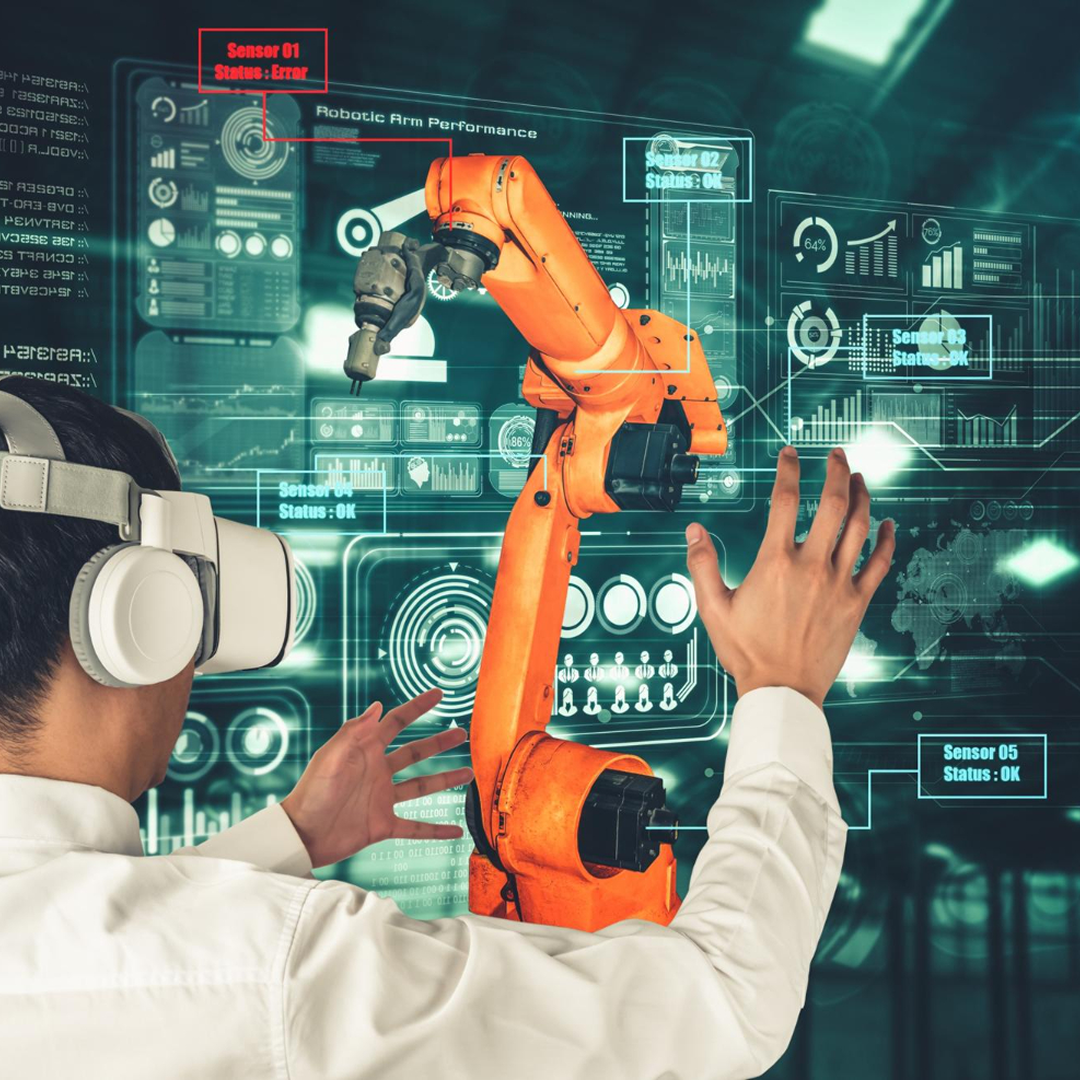
India’s manufacturing story is being rewritten, and the ones holding the pens are the mechanical engineers. The long-awaited Industry 4.0 is already here, and these numbers reflect a transformation underway:
- 65% of Indian manufacturers have adopted AI by 2024, up from 45% in 2022.
- Robotic installations increased to 59% in 2023, ranking India seventh in the global landscape.
- USD 29.43 billion is India’s industrial automation market projected size by FY2029, growing at a CAGR of 14.26%. (IMARC group)
Initiatives like Make in India and Digital India are working to accelerate this shift, and the engineers leading it will be those with deep technical grounding. The M.Tech Mechanical Engineering curriculum builds exactly that by producing engineers resilient enough to lead. Some of the best B. Tech colleges for mechanical engineering in Pune, like MIT AOE, are building what comes next.
Frequently Asked Questions
1. What are the most important subjects in M. Tech Mechanical Engineering?
The important core subjects covered are Advanced Thermodynamics, Combustion Technology, Advanced Fluid Mechanics and Advanced Heat Transfer. Research and Project work are equally critical, as they nurture inquisitiveness and investigative skills that are highly valued.
2. Are CFD and FEA mandatory in the M.Tech mechanical curriculum?
No, Computational Fluid Dynamics (CFD) AND Finite Element Analysis (FEA) are elective subjects.
3. Does M.Tech mechanical engineering focus more on research or industry applications?
The programme strikes a balance between the two with a 3-phase project for research rigour and a dedicated summer internship for industry exposure.
4. How does the curriculum prepare the students for Industry 4.0 careers?
This curriculum emphasises futuristic methods such as computational methods, design optimisation, and simulation, preparing them for digital twin development, smart manufacturing, and AI-assisted engineering. Also, the elective courses allow specialisation in areas such as automation, energy systems, and advanced manufacturing, which are sectors at the forefront of the Industry 4.0 transition. MIT AOE, an exemplary mechanical engineering college in Pune, adapts its curriculum to move with the times, because the challenges you will face certainly will.
OUR RECENT BLOG