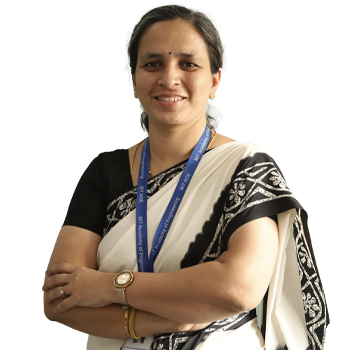
Contact No: Tel:(020) 30253500 Ext: 1096
Email – hodentc@mitaoe.ac.in
To be recognised as a distinguished department in Electronics and Telecommunication Engineering by providing quality education and nurturing innovation, research, and ethical professionalism to meet the dynamic needs of the techno-society.
- To impart strong theoretical and practical knowledge in Electronics and Telecommunication Engineering through outcome-based, activity-oriented, and skill-driven education to develop competent engineering professionals.
- To promote a culture of research, innovation, and problem-solving in emerging areas of Electronics and Telecommunication Engineering to address real-world and techno-societal challenges.
- To inculcate ethical professionalism, leadership qualities, and social responsibility through value-based education and community engagement.
- To enhance global industry readiness, entrepreneurship, and lifelong learning through industry–institute interaction, internships, and professional development programs.
- Calculus and Differential Equations
- Science of Nature
- Foundations of Computing
- Applied Mechanics
- Design Thinking
- Electronics Workshop
- Liberal Learning
- Indian Knowledge System (Vedic Mathematics)
- Statistics and Integral Calculus
- Engineering Physics
- Electrical and Electronics Engineering
- Essentials of Data Science
- Integrating Sensors and Actuators
- Logic Sensing and Actuation
- Communication Skills (English)
- Creative Technologies
- Electronics Circuits and Applications
- Digital Systems Design
- Engineering Electromagnetics
- Problem Solving Using OOP (C++)
- Universal Human Values-II
- Prototyping
- Applied Mathematics
- Minor Project Design
- ARM based Embedded System Design
- Principles of Communication Systems
- Circuit Theory
- Data Structures Lab
- Multi-Disciplinary Minor Course- I
- Entrepreneurship Skills
- Environmental Science
- Minor Project Implementation
- Internship (Life And Soft Skills)
- Indian Constitution
- Computational Intelligence
- Control Systems
- Embedded Systems for IOT
- Configurable Logic Design
- EV Architecture and Dynamics
- Fundamental of Healthcare Technologies
- Cyber Security Essentials
- Project Design Implementation
- Database Management Systems
- Embedded Linux
- Web Technologies
- Major Project – I
- Internship (Technical)
- Embedded Edge AI
- Digital Signal & Image Processing
- Healthcare Informatics
- Network Security
- Introduction to Security of Cyber Physical Systems
- Power Electronics in Electric Mobility
- CMOS VLSI Design
- Employability and Career Development
- Major Project – II
- HDI-Digital Circuit Design
- Deep Learning
- Electric Vehicle
- Data Management and Analytics
- AI in Robotics
- Embedded Linux
- Cloud Computing
- Web Technology
- Project Evaluation
- Summer Internship
- Process Automation
- Discipline Elective
- Engineering Economics
- Psychology
- Capstone Work
- Semester Long Internship Implementation *
- Telecommunications Engineer
- Electronics Engineer
- Network Engineer
- Embedded Systems Engineer
- RF (Radio Frequency) Engineer
- VLSI Design Engineer (Very Large-Scale Integration)
- Signal Processing Engineer
- Wireless Communication Engineer
- Software Developer (Telecommunication/Embedded)
- Satellite Communication Engineer
- Data Communication Engineer
- Automation and Control Engineer
- System Design Engineer
- Cybersecurity Specialist (Telecom)
- Research and Development Engineer
- Product Manager (Telecom Electronics)
- Field Support Engineer (Telecom)
- IoT (Internet of Things) Engineer

















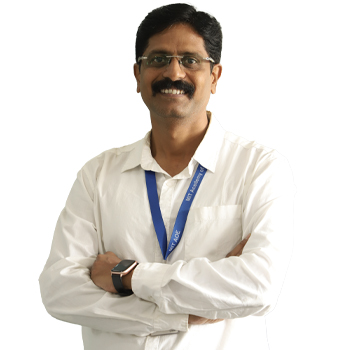







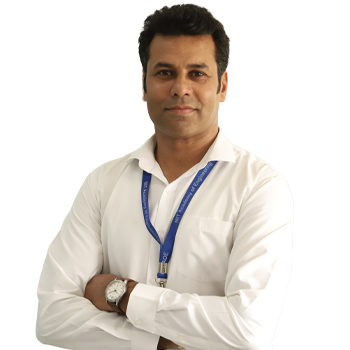
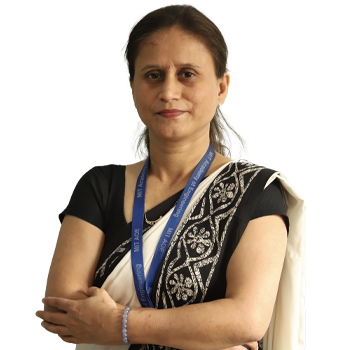

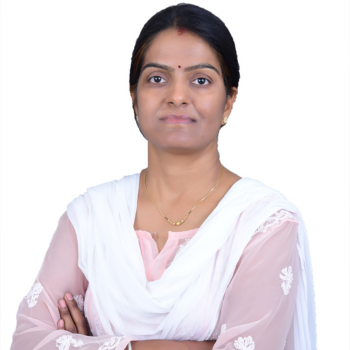

- To motivate faculty for doctoral and post-doctoral assignments at various National and International universities and organizations of repute.
- To initiate research projects in thrust areas of Engineering funded by various National and International agencies.
- To develop interaction and cooperation between researchers for interdisciplinary and multidisciplinary work.
- To explore new horizons of knowledge and ensure its practical implementation through collective efforts and quality research work.
- To provide adequate facilities, resources, and an environment conducive for research work.
The faculty at School of E&TC Engineering are involved in cutting edge research that can have a positive influence on the life of mankind. The concerted efforts of faculty are manifested in the form of completing a number of research projects funded by University of Pune, AICTE and Department of Atomic Energy, Govt. of India. Research at School of Electrical Engineering are as follows:
SIP :- Signal & Image Processing
EmbSys :-VLSI and Embedded System
WiCom :-Wired & Wireless Communication
SysCon :- Systems & Control
| RESEARCH GROUP: SIP – SIGNAL & IMAGE PROCESSING | ||
|---|---|---|
| SR. NO. | MEMBERS FROM E&TC | THRUST AREAS OF THE GROUP |
| 1 | Dr. Dipti Sakhare (C) |
|
| 2 | Dr. Prachi R. Rajarapollu (M) | |
| 3 | Dr. Usha Verma (M) | |
| 4 | Vinayak B. Kulkarni (M) | |
| 5 | Smita S. Kulkarni (M) | |
| 6 | Nutan V. Bansode (M) | |
| 7 | Aniket K. Kemalkar (M) | |
| 8 | Rashmi P. Mahajan (M) | |
| 9 | Isaq Shikalgar (M) | |
| 10 | Kalpana Pawase (M) | |
| 11 | Dr. Gayatri Ambadkar (M) | |
| RESEARCH GROUP: VLSI & EMSYS – VLSI AND EMBEDDED SYSTEM | ||
|---|---|---|
| SR. NO. | MEMBERS | THRUST AREAS OF THE GROUP |
| 1 | Dr. Rashmi P. Mahajan (C) |
|
| 2 | Dr. Dipti Y. Sakhare (M) | |
| 3 | Dr. Prachi R. Rajarapollu (M) | |
| 4 | Savita R. Pawar (M) | |
| 5 | Shilpa K. Rudrawar (M) | |
| 6 | Amit V. Nagarale (M) | |
| 7 | Shridhar A. Khandekar (M) | |
| 8 | Isaq Shikalgar (M) | |
| 9 | Vinaya S. Tapkir (M) | |
| 10 | Vikrant Verma (M) | |
| RESEARCH GROUP : WiCom – WIRED & WIRELESS COMMUNICATION | ||
|---|---|---|
| SR. NO. | MEMBERS | THRUST AREAS |
| 1 | Vinayak B. Kulkarni (M) |
|
| 2 | Dr. Alka Jakhar (M) | |
| 3 | Vaibhav Gijare (M) | |
| 4 | Vivekanand Joshi (M) | |
| 5 | Vikrant Verma (M) | |
| RESEARCH GROUP : SYSCON – SYSTEMS & CONTROL | ||
|---|---|---|
| SR. NO. | MEMBERS | THRUST AREAS |
| 1 | Dr. Aniket D. Gundecha (C) |
|
| 2 | Vinayak B. Kulkarni (C) | |
| 3 | Satish S. Kabra (M) | |
| 4 | Vaishali A. Katkar (M) | |
| 5 | Ashitosh D. Chavan (M) | |
| 6 | Nikhil B. Sardar (M) | |
| 8 | Dr. Sneha Pokharkar (M) | |













Artificial intelligence evokes images of supercomputer assistants, machines that can think creatively, and, to some, scenes from their favorite sci-fi movie. The reality, despite not being as futuristic, is not far off from this. AI refers to the ability of a computer or machine to mimic the competencies of the human mind, which often learns from previous experiences to understand and respond to
Artificial intelligence evokes images of supercomputer assistants, machines that can think creatively, and, to some, scenes from their favorite sci-fi movie. The reality, despite not being as futuristic, is not far off from this. AI refers to the ability of a computer or machine to mimic the competencies of the human mind, which often learns from previous experiences to understand and respond to language, decisions, and problems. The market for AI technologies is vast, amounting to around 200 billion U.S. dollars in 2023 and is expected to grow well beyond that to over 1.8 trillion U.S. dollars by 2030.
AI comes in many forms
AI is broadly divided into machine learning and deep learning. These then have further subcategories such as natural language processing, computer vision, robotics, and more. Machine learning constitutes the most basic and simple AI form. Programs operating on machine learning are given a very clear set of parameters to use in interactions with humans and are limited in scope. It is also the most common form of AI, used in basic chat assistants, apps, voice commands, and other limited engagements.Deep learning is closer to what a person would imagine from AI. In deep learning programs, AI has initial parameters and datasets but can integrate user information as it interacts with humans. In this way, the AI learns as it is used, becoming more sophisticated in the process. Recent examples of advanced deep learning programs are OpenAI’s ChatGPT and Google’s Bard.
Generative AI has entered the field
A new trend in AI development surged into the limelight at the end of 2022 in the form of generative AI. Although not being strictly new, with such programs already appearing over the last five years, advancement in this field have been staggering. Generative AI refers to programs that can, as the name suggests, generate text, images, music, and more. Driven by the release of ChatGPT-3 in late 2022, the field has drawn in Google, Microsoft, Amazon, and recently, Elon Musk’s X as well. All are competing in the development of the most advanced generative AI through a variety of startup companies. The advancement in this case is not without its flaws as generative AI companies have been accused of training their AI models on copyrighted texts and images, snubbing writers and artists.
The AI train steams ahead
With the advancements in deep learning and machine learning, coupled with the immense effect such programs may have on the global economy, it is to be expected that AI will be in continuous competitive development in all advanced economies. Any company looking to leverage an advantage on its competitors would do well to engage early so as not to be left behind.
This text provides general information. Statista assumes no liability for the information given being complete or correct. Due to varying update cycles, statistics can display more up-to-date data than referenced in the text.