Top Engineering Programs Offered at MIT Academy of Engineering
Why does pursuing an engineering degree matter today?
Understanding the Engineering Landscape
How to Choose the Right Engineering College
Preparing for Engineering Admission & Entrance Exams
Maximizing Your Engineering Experience
Supporting Your Child’s Engineering Journey (For Parents)
Comparing Engineering Programs with Other Courses
Exploring Opportunities After Engineering
Latest Trends & Skills in Engineering Programs
Introduction
According to the All India Council for Technical Education (AICTE), India produces over 15 lakh engineering graduates every year, and the demand for skilled engineers keeps growing across exciting fields like Artificial Intelligence, Manufacturing, Smart Cities, Electric Vehicles, Space Technology, Robotics, and more.
As per the India Skills Report 2026, engineering (BE/BTech) graduates' employability stood at 70.15%, a slight dip from 71.5% in 2025.
But even after graduating, students are subjected to extreme difficulty in getting hired. This happens even if you might have been studying in probably one of the best engineering colleges in Pune, the college failed to make you job-ready. Thus, choosing the right engineering program can feel overwhelming, with so many options and opinions coming your way, but this decision will play a major role in the path your academic and professional life takes.
Pause for a moment.
Because engineering isn’t just about earning a degree. It’s about learning how to solve real-world problems, building technologies that can shape the future, and stepping into careers that genuinely make an impact.
So whether you’re browsing through engineering colleges in Pune, comparing the best engineering colleges in Maharashtra, or simply trying to understand what an engineering program truly has to offer, this guide is designed especially for you to help you make a confident and informed choice about your future.
Why does pursuing an engineering degree matter today?
1. Growing demand for engineers in India and abroad
According to recent NASSCOM insights, India’s technology workforce has already crossed 5.8 million professionals, with demand growing rapidly in high-impact domains like Data Science, Cloud Computing, Artificial Intelligence, and Big Data Analytics. Global companies continue to rely on Indian engineers for their strong technical foundation, problem-solving skills, and remarkable adaptability across emerging technologies.
2. Versatility of engineering degrees
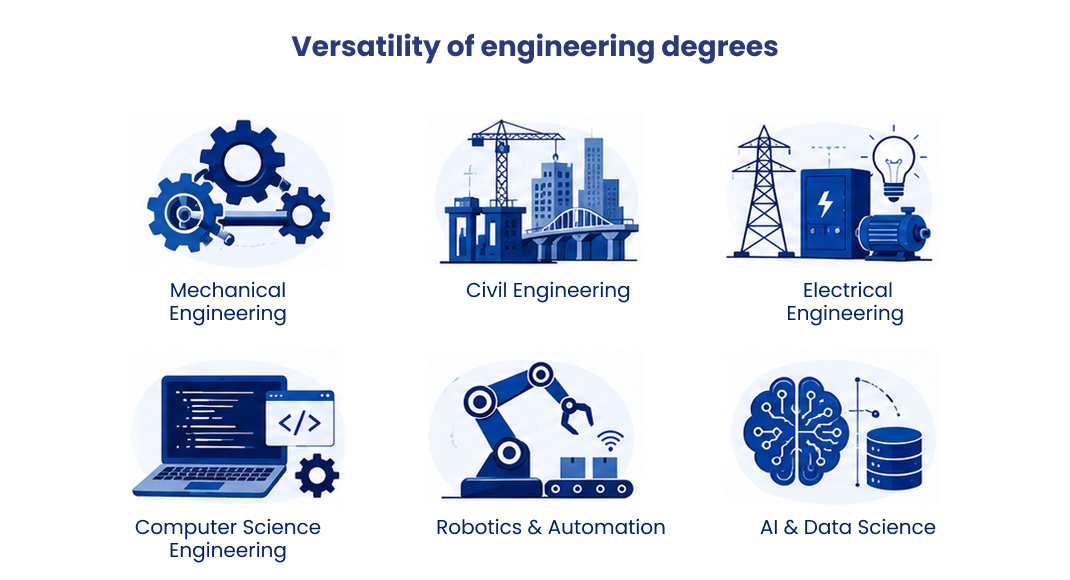
- Mechanical Engineering – EV systems, robotics, aerospace components
- Civil Engineering – sustainable infrastructure, geotechnical innovation
- Electrical Engineering – smart grids, renewable energy systems
- Computer Science Engineering – AI, cybersecurity, full-stack development
- Robotics & Automation – autonomous systems, industrial automation
- AI & Data Science – machine learning, predictive analytics
This versatility ensures every student finds a specialization aligned with their strengths and career goals.
3. Real-life impact of engineering knowledge
Engineers design the world we live in.
Your mobile apps, the metro you travel in, the AI models shaping global tech —they all stem from engineering innovation.
4. Better career opportunities, employability & skills
Engineering graduates command strong employability due to their:
- Technical knowledge
- Analytical thinking
- Problem-solving mindset
- Exposure to teamwork and leadership
It’s one of the most future-proof degrees.
Who this guide is for?
- Students exploring engineering programs and career paths
- Parents supporting their child's admission journey
- Educators guiding engineering aspirants
Read More: The Benefits of a YLIP
1. Understanding the Engineering Landscape
What is an engineering program?
An engineering program provides structured academic and practical training in technology-driven problem-solving. In India, most students pursue:
- Undergraduate B.Tech/B.E programs (4 years)
- Integrated 5-year engineering programs (B.Tech + M.Tech)
Types of engineering courses in India & Pune
Pune is known as the “Oxford of the East” and houses some of the best engineering colleges in India 2025, making it an ideal destination for engineering aspirants.
Students can explore:
- B.Tech (various specializations)
- Diploma to Degree pathways
- Lateral entry programs
- Integrated engineering degrees
Popular engineering specializations
- Mechanical Engineering
- Civil Engineering
- Electrical Engineering
- Computer Science Engineering
- Robotics & Automation
- Artificial Intelligence & Data Science
- Internet of Things (IoT)
- Automation & Smart Manufacturing
What Are the Benefits of an Engineering Degree?
- Strong foundation in STEM: Builds deep knowledge of science, technology, engineering, and math. Helps you understand how modern systems and innovations work.
- Analytical and logical reasoning: Trains your mind to think clearly and solve complex problems. Strengthens decision-making skills used across every industry.
- Hands-on experience through labs and projects: Gives practical exposure beyond textbooks and lectures. Prepares you for real technical work and teamwork.
- Exposure to real-world problem-solving: Lets you work on challenges inspired by real industry needs. Connects classroom learning with practical applications.
- Opportunities in India and globally: Open doors to diverse career paths across countries and sectors. Engineering skills are valued worldwide.
Common myths & misconceptions
Myth 1: Engineering is only for students who are “good at PCM.”
Truth: Engineering has evolved skills like creativity, critical thinking, and digital aptitude matter equally.
Myth 2: Engineering has limited career scope.
Truth: Engineering careers now span fintech, biotechnology, entertainment, sustainability, space, and more.
Read More: How Industry 4.0 is Revolutionising Technology & Operations
2. How to Choose the Right Engineering College
Choosing the right college matters as much as choosing the right specialization. If you’re comparing private engineering colleges in Pune, or filtering the best private engineering colleges in Pune, keep these factors in mind:
2.1 Factors to Consider
1. Accreditation & Affiliation
A credible engineering college must be:
- NAAC Accredited
- NBA Accredited
- Approved by AICTE
- Affiliated with a reputed university
This ensures quality curriculum, recognition, and better placement opportunities.
2. Faculty & Curriculum
A good college will have:
- Experienced professors: Learn from faculty with strong academic knowledge and industry exposure.
- Industry-linked curriculum: Courses designed to match current industry requirements.
- Updated subjects like AI/ML, IoT, Robotics: Stay future-ready with trending technology specializations.
- Research-oriented coursework: Build critical thinking through projects, papers, and innovations.
3. Infrastructure & Labs
Modern engineering demands advanced labs and digital tools:
- Robotics labs: Practice automation and mechanical design in real setups
- AI & ML research centers: Work on data models and next-gen algorithms
- Cloud computing facilities: Gain hands-on experience with scalable digital platforms
- Prototyping & fabrication labs: Turn ideas into physical working models
4. Placements & Industry Tie-Ups
Check:
- Average packages: Reflect overall placement quality and return on investment.
- Number of recruiting companies: Indicates the diversity of career opportunities available.
- Internship opportunities: Offer valuable real-world industry exposure.
- MoUs with industry leaders: Enable training, projects, and recruitment partnerships.
Read More: Factors to Consider When Choosing Engineering College in Pune
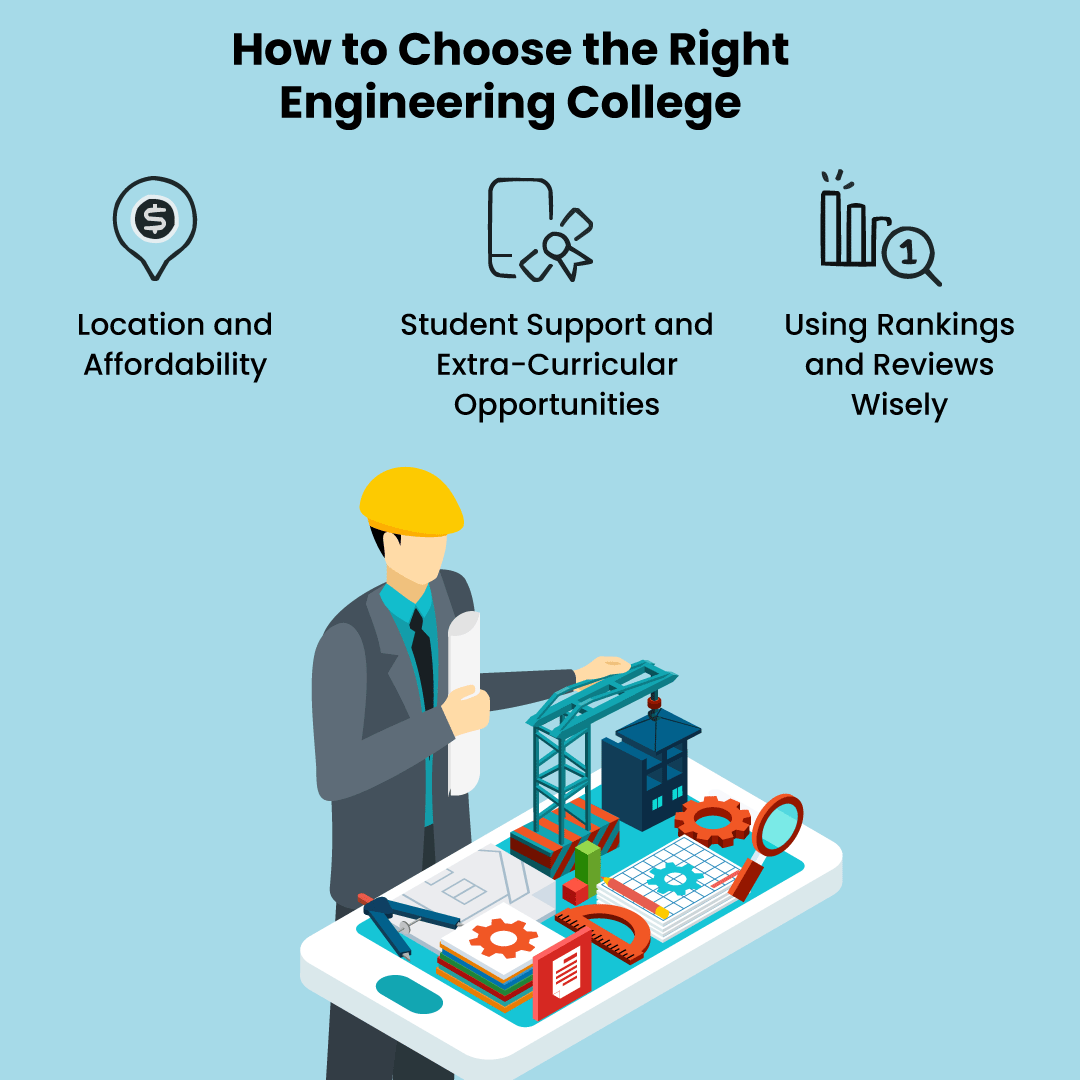
2.2 Location and Affordability
Pune, known for its innovation hubs like Hinjawadi and Kharadi, offers:
- Affordable living compared to metros: Lower rent, food, and transport costs compared to cities like Mumbai or Bengaluru.
- Access to IT and manufacturing companies: Close proximity to major tech parks, industrial zones, and corporate offices for internships and jobs.
- Student-friendly atmosphere: Safe neighborhoods, student hubs, affordable hostels, and vibrant campus life.
Cost components include:
- Tuition fees
- Hostel fees
- Daily living expenses
- Transportation
- Scholarships, if available
2.3 Student Support & Extra-Curricular Opportunities
Top engineering colleges offer holistic development through:
- Technical clubs (Robotics, Coding, AI): Develop technical skills through competitions, projects, and workshops.
- Hackathons: Short innovation events that sharpen programming and teamwork skills.
- Innovation labs: Spaces for experimenting with ideas, prototypes, and startups
- Industry visits: Exposure to real workplace environments and engineering practices.
- Cultural clubs: Encourage creativity, leadership, and stress relief beyond academics.
- Mentorship programs: Provide academic guidance and career direction from faculty and alumni.
- Career counseling: Supports resume building, interview preparation, and placement planning.
2.4 Using Rankings & Reviews Wisely
Rankings can be helpful, but verify:
- Placement transparency: Verify authentic salary data, company lists, and placement percentages.
- Faculty credentials: Check professors’ qualifications, research work, and industry experience.
- Alumni feedback: Gives real insight into campus life and career outcomes.
- Media articles: Offer independent opinions and institutional achievements.
- NAAC/NIRF listings: Government-backed ratings that confirm college quality standards.
Be cautious of manipulated or outdated rankings.
3. Preparing for Engineering Admission & Entrance Exams
India’s major engineering entrance exams include:
- JEE Main & Advanced
- MHT-CET (for Maharashtra colleges)
- Institution-level entrance tests
- CAP rounds for Maharashtra admissions

3.1 Understanding Exam Patterns & Syllabus
Most engineering entrance exams test:
- Physics
- Chemistry
- Mathematics
- English
- Engineering aptitude (in some exams)
Read More: CAP Round 3: Information and Seat Allotment
3.2 Tips & Strategies for Cracking Exams
- Create a realistic study timetable
- Focus on conceptual clarity
- Solve mock tests regularly
- Analyze mistakes after every test
- Practice previous years’ papers
- Strengthen time management
- Attempt easy questions first
3.3 Importance of Soft Skills & Interviews
Many colleges conduct:
- Group discussions
- Personal interviews
- Communication tests
Soft skills help you:
- Stand out in interviews
- Collaborate effectively
- Perform better in placements
- Build leadership qualities
4. Maximizing Your Engineering Experience
Engineering is not just classroom learning; it's a blend of academics, experience, networking, and innovation.
4.1 Academic Excellence
Adopt these strategies:
- Follow structured study routines
- Actively participate in labs
- Work on mini and major projects
- Learn simulations and coding tools
- Explore research papers & publications
4.2 Internships & Practical Exposure
Internships bridge the gap between theory and industry. Students should engage in:
- Corporate internships
- Research internships
- Live projects
- Industry visits
Read More: Future-Ready Engineers
4.3 Co-Curricular & Leadership Activities
Colleges with strong campus life encourage:
- Student-run clubs: Help students take initiative, collaborate, and manage real teams.
- Event management: Build leadership, planning, and organizational skills through campus events.
- Technical competitions: Offer hands-on exposure to problem-solving and innovation challenges.
- Debates, seminars, and workshops: Improve communication skills and subject knowledge through active participation.
- Innovation initiatives: Encourage students to develop startup ideas and technical solutions.

4.4 Networking & Career Planning
Build connections through:
- Alumni networks
- Faculty mentors
- Industry professionals
- Career counselors
- Online platforms like LinkedIn
Read More: Glimpse into the Future of Engineering
5. Supporting Your Child’s Engineering Journey (For Parents)
Parents play a crucial role in:
- Helping choose the right specialization
- Understanding college credibility
- Encouraging participation in internships
- Providing emotional support during exam prep
- Motivating students to balance academics & extracurriculars
A supportive environment boosts confidence and performance.
6. Comparing Engineering Programs with Other Courses
Engineering vs Polytechnic
Polytechnic is diploma-level, shorter, and practical-focused. Engineering is more comprehensive with broader career opportunities.
Engineering vs B.Tech
In India, B.E. and B.Tech are academically similar, but B.Tech is generally more application-oriented.
Engineering vs B.Sc in Technology
B.Sc Tech offers foundational knowledge but lacks the depth, industry exposure, and placements of a full engineering program.
7. Exploring Opportunities After Engineering
Graduates can explore roles like:
- Mechanical Engineer
- Civil Engineer
- Electrical Engineer
- Software Developer
- Robotics Engineer
- AI/ML Engineer
- Data Scientist
- IoT Developer
- Automation Specialist
Further education includes:
- M.Tech
- MBA
- PMP
- Six Sigma
- AI/ML certifications
8. Latest Trends & Skills in Engineering Programs
Today’s engineering demands knowledge of:
- Industry 4.0
- AI & Machine Learning
- Robotics & Automation
- Internet of Things (IoT)
- Smart Manufacturing
- Cloud Computing
- Cybersecurity
Engineers who upskill in these areas are highly employable.
Conclusion
Engineering now is more than just a degree. It is a gateway to exciting careers in technology, innovation, entrepreneurship, and research. With the right college, smart preparation, and a confident mindset, you can build skills that open doors to opportunities both in India and abroad.
This guide explains how to choose the right engineering program and succeed in building a strong career. It covers the growing demand for engineers, popular specializations like Computer Science, AI, Robotics, Mechanical, Civil, and Electrical, and the importance of selecting a college with proper accreditation, experienced faculty, modern labs, good placements, and strong industry connections. It also highlights Pune as a student-friendly and affordable education hub.
Whether you are searching for the best Engineering Colleges in Maharashtra or shortlisting the best private engineering colleges in Pune, this guide helps you take your first confident step toward an engineering future.
👉 Visit MITAOE Today
Start your journey toward becoming a skilled, future-ready engineer.
OUR RECENT BLOG